What Actually Changes
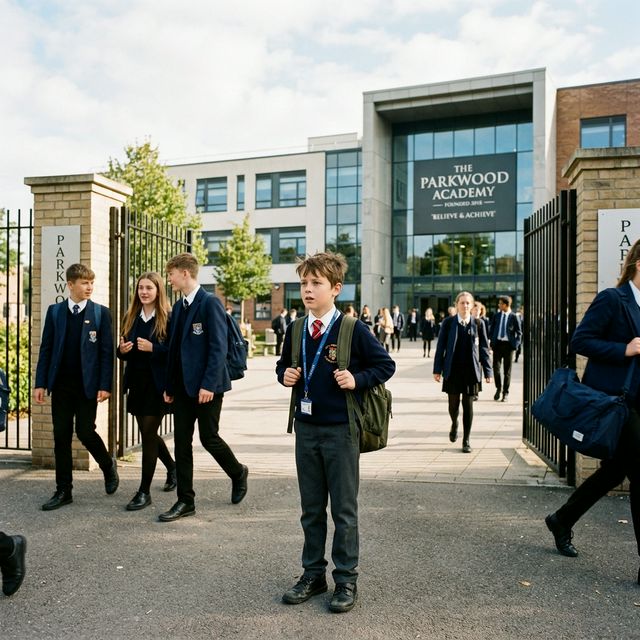
The jump from primary to secondary school is not just about the building being bigger. Almost everything about the school experience changes simultaneously, and it happens over a single summer. Understanding what's different helps you prepare your child - and yourself - for the shift.
In primary school, your child has one main teacher who knows them deeply - their strengths, triggers, friendships, moods. In secondary school, they'll have ten or more different teachers across the week, each seeing them for perhaps three or four hours. No single teacher will know them the way their Year 6 teacher did, at least not at first. The form tutor fills some of that gap, but it's a different relationship.
The school itself is bigger - often dramatically so. Your child will go from a school of perhaps 200-400 children to one of 800-1,500 or more. They'll navigate corridors, stairwells, specialist classrooms, and a layout that feels impossible to learn at first. They'll move between rooms every hour, carrying their bag and equipment with them. This physical transition is one of the things children worry about most - and one of the things they master fastest.
Academically, the expectations step up. Homework increases in volume and complexity. Subjects are taught by specialists - your child will have a dedicated historian, scientist, linguist, and mathematician teaching each subject. The depth of study increases, and the pace can feel faster. But most secondary schools spend the first half-term settling children in, revisiting some KS2 content, and establishing routines before pushing forward.
What Children Worry About
Research into children's transition anxieties is remarkably consistent. The worries are predictable - and, encouragingly, most resolve within the first few weeks. Getting lost is almost always the number one concern. Children picture themselves wandering endless corridors, unable to find their next lesson. In reality, Year 7 students are given maps, older student "buddies", and teachers are universally understanding about new students taking wrong turns.
Not knowing anyone is the second most common worry, particularly for children whose primary school friends are going to a different secondary. This is real and valid. However, most secondary schools deliberately mix up form groups to prevent cliques and create fresh social opportunities. Many children find that they make their closest secondary school friendships with people they didn't know in primary.
Bullying, stricter teachers, and harder work are also on the list. Bullying concerns are understandable but rarely materialise at the level children fear. Secondary schools are generally very attentive to Year 7 welfare precisely because they know it's a vulnerable time. Stricter expectations around behaviour and uniform are real but not usually harsh - they're about establishing habits in a larger community. And the work does get harder, but gradually.
How Schools Prepare Children
Most secondary schools take transition seriously. The standard approach includes one or two transition days in June or July, where Year 6 children spend a day at their new school - meeting form tutors, navigating the building, trying lessons, and eating in the canteen. Good schools also send staff to visit feeder primary schools beforehand, gathering information about each child's academic level, friendship groups, and any additional needs.
Primary schools play their part too. Many Year 6 classes run transition projects in the summer term, building independence skills, practising organisation (packing bags for different lessons, managing a timetable), and talking openly about what secondary school will be like. Some primaries arrange joint events with their feeder secondary, so children can meet their new peers before September.
The quality of transition support varies. The best schools maintain close contact with primary schools, share detailed information about each child, and follow up individually with any child flagged as potentially vulnerable during transition. They establish pastoral structures - form tutor time, house systems, mentoring - that give every child an adult they can turn to. If you're choosing a secondary school, asking about their transition programme is a good indicator of how much they invest in children's wellbeing.
What Parents Can Do
Practise the journey. Before September, walk or travel the route to school several times. Let your child lead. Navigate public transport together if that's what they'll use. The journey itself is a source of anxiety, and familiarity dissolves fear. If they'll be walking with friends, arrange practice walks together.
Talk about it, but don't over-talk. Acknowledge your child's worries without minimising them - "It's completely normal to feel nervous" is more helpful than "You'll be fine." Share your own experiences of starting something new. Ask open questions rather than yes/no ones: "What are you most looking forward to?" rather than "Are you worried?"
Build independence gradually during Year 6. Let them pack their own bag. Give them small responsibilities around the house. If they don't already, start giving them opportunities to manage short trips independently - to a friend's house, to the local shop. Secondary school requires a level of self-organisation that primary school doesn't, and practising at home makes a difference.
If your child has SEN or additional needs, make sure the secondary school has received all relevant information from the primary - and don't assume they have. Contact the SENCO directly. Ask about the transition arrangements specifically for children with additional needs. Many schools offer extra transition visits, social stories, photo tours of the building, and introductions to key staff for children who need more support.
Note: Transition arrangements vary between schools. Contact your child's new secondary school directly for specific dates, requirements, and support available. Many schools publish transition guides on their websites.